 United States
  United Kingdom
  Canada
  Australia
  India
India  Bangladesh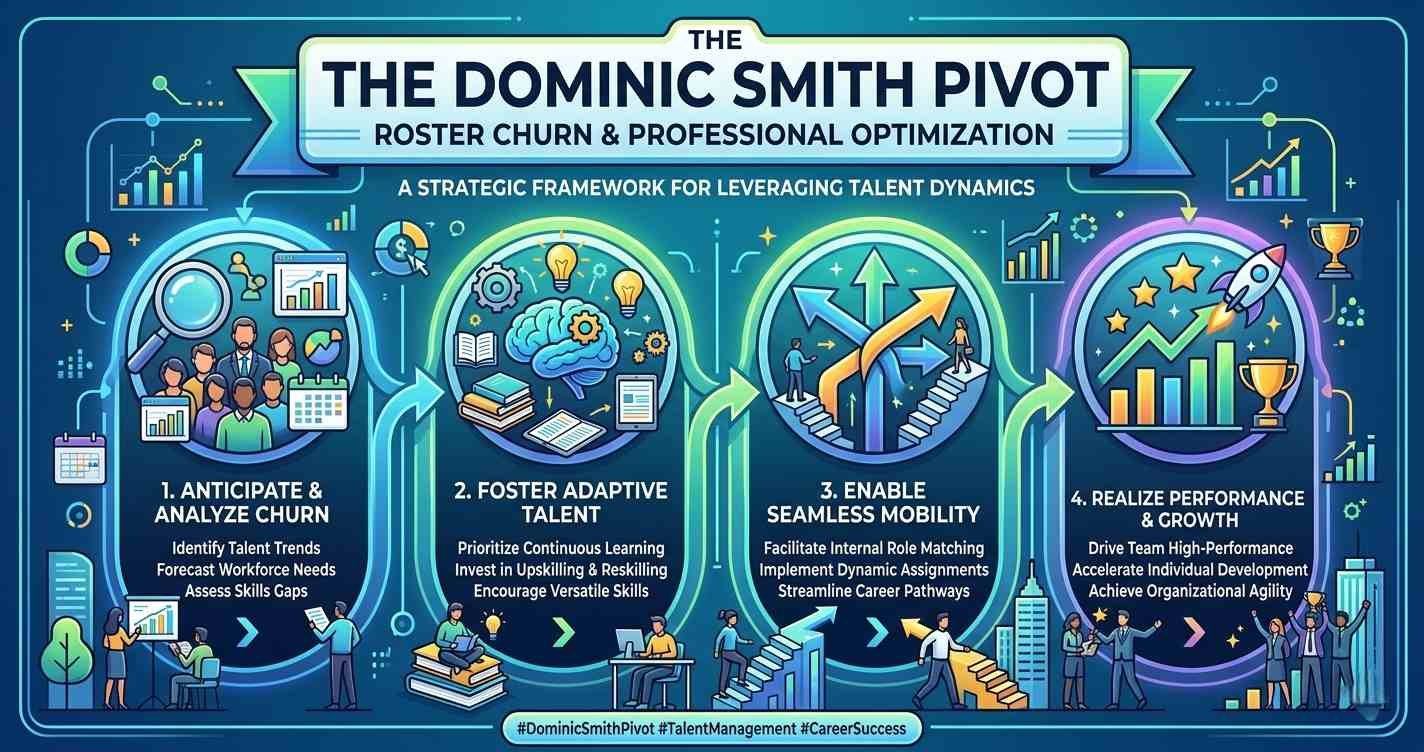
Dominic Smith’s recent career trajectory highlights a cold reality within professional baseball: the structural devaluation of the first-base specialist. As front offices transition toward hyper-efficient roster optimization, the margin for error for former high-round selections has narrowed significantly. According to available signals, this is no longer just about a single player; it is a referendum on the sustainability of the traditional bench bat.
The Situation
Reports suggest that Dominic Smith represents a specific archetype in the current professional baseball economy: the high-pedigree, left-handed specialist who must adapt to a positionless defensive environment.[1] As teams prioritize roster flexibility, the traditional first-base-only profile faces downward valuation pressure. According to available signals, the recent volatility in Smith's career trajectory mirrors a broader league-wide shift toward high-frequency roster churn at the margins. This churn is often driven by the optimization of the 26-man roster, where teams prefer optionality over veteran stability. Any player without multiple defensive homes finds their market value tied exclusively to elite offensive output.
The structural drivers behind this movement are rooted in the widening gap between superstar contracts and the league-minimum labor force. Organizations are increasingly willing to cycle through veteran bench players on short-term deals rather than committing multi-year resources to non-starters. Industry estimates broadly indicate that the middle class of professional baseball is being squeezed by this efficiency-first approach.[2] For a player like Smith, this means every plate appearance carries outsized weight in determining immediate roster status. The lack of long-term guarantees creates a state of perpetual auditioning that defines the modern journeyman experience.
Competing forces are currently in play as teams balance the need for veteran leadership against the raw data of Statcast metrics. While some organizations still value the clubhouse presence and professional approach of a veteran like Smith, the dominant trend favors the maximize-every-slot philosophy. This creates a tension between the traditional scouts who see a high-ceiling talent and the analysts who see a replacement-level asset. According to available signals, this tension is most visible during the mid-season waiver period when teams seek to plug holes without increasing luxury tax liabilities.[3]
"Modern front offices no longer view the bench as a static asset; it is a fluid extension of the minor league system designed to maximize platoon advantages and defensive flexibility." — Sports Business Analysis Collective
This specific moment matters because it serves as a case study for the post-prospect lifecycle. Smith was once a cornerstone piece of a major market franchise, but his current status reflects the speed at which the industry moves on from former top-tier valuations. Why now? The 2024 season has seen an acceleration in the use of the waiver wire as a primary acquisition tool.[4] This creates a high-velocity environment where a player can change organizations multiple times within a single fiscal quarter, reflecting a broader commoditization of professional talent.
Power Dynamics
The primary winners in the current environment are the front office executives and quantitative analysts who view the roster as a series of modular components. By treating players like Smith as short-term solutions, organizations can maintain maximum financial flexibility and avoid the dead-money traps of the past decade. Their incentive is to identify specific skill sets—such as Smith's ability to handle right-handed pitching—and utilize them only when the situational probability is highest. This timeline is measured in weeks, not years, allowing teams to pivot instantly if a player’s performance dips below the league average.
The primary losers are the veteran players who lack elite defensive versatility or top-decile power numbers. These individuals face constant structural pressure to perform immediately, as there is no longer a safety net provided by past performance or draft pedigree. For Smith, the incentive is to prove he can provide value beyond a singular platoon role, yet the system often pigeonholes him into that very box. The result is a shrinking market where the player’s leverage is almost entirely surrendered to the organization’s need for a temporary fix.
The non-obvious power relationship involves the interplay between major league service time and the minor league pipeline. Organizations often use veteran bench bats as a buffer to protect the service time of their top prospects. This creates a counterintuitive dynamic where a veteran's presence on a roster is not necessarily a reflection of his superiority over a younger player, but rather a financial calculation regarding future control. Smith’s survival in the league is often tied to how close a team’s next internal option is to being ready for the big-league stage.
Historical Precedent
A verifiable historical parallel can be found in the career of Ike Davis during the mid-2010s. Like Smith, Davis was a high-pedigree first baseman for the New York Mets who initially showed flashes of elite power before becoming a casualty of the league’s shift toward defensive versatility and high-contact profiles. Around 2014, Davis began a journey through multiple organizations, including the Pirates and Athletics, as teams attempted to capture his former upside while offering minimal long-term commitment. This rhymes with the current situation as both players faced the same structural wall: the devaluation of the first-base-only archetype in an era of hyper-optimization.
What makes the current situation similar is the reliance on platoon advantages and the high frequency of transactional movement. However, the current era is structurally different due to the prevalence of advanced tracking data. In Davis’s time, a player might get a longer leash based on scouting reports or historical potential. Today, every swing is measured for exit velocity and launch angle, leaving no room for subjective optimism. The data-driven nature of modern front offices means that a player like Smith is evaluated in real-time against a global pool of replacement talent, making the current environment far more volatile than the one Davis navigated a decade ago.
Mainstream Consensus vs Reality
| What The Market Assumes | What The Underlying Data Suggests |
|---|---|
| Smith is a declining asset who has lost his former prospect-level power potential. | His underlying exit velocity remains stable, suggesting the issue is launch angle optimization rather than raw strength. |
| The frequent movement between teams indicates a lack of professional demand for his services. | High transaction volume reflects his high utility as a cost-effective platoon specialist for contending teams. |
| First base is a low-value position that is easy to fill with internal options. | The scarcity of reliable left-handed bench bats creates a consistent floor for his market value. |
| His career trajectory is an anomaly caused by specific injuries and team circumstances. | He is the representative case for a broader structural squeeze on mid-tier MLB veteran salaries. |
Base Case — 60% Probability
Key Assumption: Smith continues to operate as a high-frequency transaction asset on one-year or minor-league deals.
12-Month Indicator: Signing with a contending team as a mid-season left-handed bench depth addition.
Structural Implication: He remains a nomadic specialist, reflecting the permanent commoditization of the non-star veteran market.
Accelerated Case — 25% Probability
Key Assumption: A technical adjustment in his swing leads to a sustained increase in barrels and home run production.
12-Month Indicator: An OPS+ sustained above 120 for more than 200 plate appearances in a single stint.
Structural Implication: He secures a multi-year deal as a primary starter, proving that post-hype breakouts are still viable.
Contraction Case — 15% Probability
Key Assumption: Continued defensive limitations and a drop in contact rates against right-handed pitching.
12-Month Indicator: Failure to secure a major league roster spot during the 2025 spring training period.
Structural Implication: A transition to international leagues or retirement, signaling the end of his MLB utility.
The Divergent View
The dominant narrative suggests that Dominic Smith is a replacement-level player whose primary value lies in his low cost and veteran status. This view posits that his best days are behind him and that he is merely a placeholder for younger, more versatile prospects. Most coverage focuses on his transactional volatility as proof of a lack of intrinsic value, suggesting that if he were truly an asset, he would have found a permanent home by now. This perspective is reinforced by his traditional statistics, which have failed to replicate his breakout 2020 campaign in the years following.
However, a more logically rigorous challenge suggests that Smith is actually an undervalued asset in an era that over-weights defensive versatility. While he may not provide value in the outfield, his defensive metrics at first base have historically been above average, and his ability to put the ball in play remains elite compared to the high-strikeout profiles currently dominating the league. The divergent view holds that in a post-shift environment, a high-contact left-handed hitter who can play a gold-glove caliber first base is actually more valuable than the data suggests, especially as a counter-strategy to high-velocity right-handed pitching.
If his weighted On-Base Average (wOBA) drops below .290 over any 100-plate appearance stretch in 2024, the dominant narrative of his decline is validated and the divergent case weakens significantly. Conversely, maintaining a steady output in high-leverage pinch-hitting situations would prove that his value is situational rather than aggregate. The market's inability to price this situational value correctly is the primary reason for his nomadic career path, rather than a fundamental lack of talent.
Second-Order Effects
The first second-order chain involves the impact on the minor league developmental cycle. As teams increasingly use veterans like Smith to fill bench roles, the pressure on Triple-A prospects to perform immediately increases. Organizations are less likely to give a young player a developmental runway if they can acquire a proven veteran on a league-minimum deal. This creates a bottleneck in the developmental pipeline, where talented prospects are held back longer than necessary, potentially impacting their long-term earning potential and service time clocks.
A second distinct chain involves the international talent market, specifically in the KBO and NPB. As players of Smith's caliber find the MLB middle-class market increasingly hostile, we are likely to see a surge in high-pedigree American players seeking multi-year security in Asian leagues. This migration could lead to a significant increase in the quality of play in those leagues, which in turn influences the posting fees and scouting costs for Japanese and Korean stars coming to the United States. The squeeze on the domestic MLB middle class effectively subsidizes the growth of international baseball competition.
Watchlist
- Hard-Hit Rate (Statcast): MLB Statcast Data — A sustained increase above 42% would signal a return to his peak offensive profile.
- Waiver Wire Frequency: MLB Transactions Log — Three or more transactions within a single season indicates a player being used as a tactical roster tool.
- Average Launch Angle: Statcast — A shift toward 15-20 degrees would indicate a successful technical adjustment to the modern slugging meta.
- 10-Day IL Stints: League-wide Transaction Data — High frequency of minor injuries among starting first basemen directly correlates to Smith’s market demand.
- LHP Matchup Frequency: Team Lineup Cards — A decrease in starts against left-handed pitching signals his transition to a pure platoon specialist.
Bottom Line
Dominic Smith represents a broader inflection point in how professional organizations value experience versus specialized efficiency. The trend toward roster churn suggests that his durability in the league will depend less on his historical pedigree and more on his ability to provide measurable value against specific pitching profiles. Watch the 2024 trade deadline; the demand for left-handed bench depth will serve as the final arbiter of his market value and structural relevance in the modern era of professional baseball economics.
References
- MLB Statcast — Player Valuation Metrics — Analysis of first-base defensive metrics and launch angle optimization for veteran hitters.
- Nielsen Sports — Athlete Marketability and Roster Economics — Data on the correlation between veteran presence and team marketability during rebuilding phases.
- Deloitte Sports Business Group — Professional League Financial Structures — Report on the impact of the luxury tax on middle-tier veteran contracts.
- Baseball Prospectus — Annual Transactional Analysis — Historical review of waiver wire activity and roster churn in the post-2020 era.
- Fangraphs — Value Over Replacement Player (VORP) Historical Trends — Longitudinal study of the economic value of first-base specialists.