 United States
  United Kingdom
  Canada
  Australia
  India
India  Bangladesh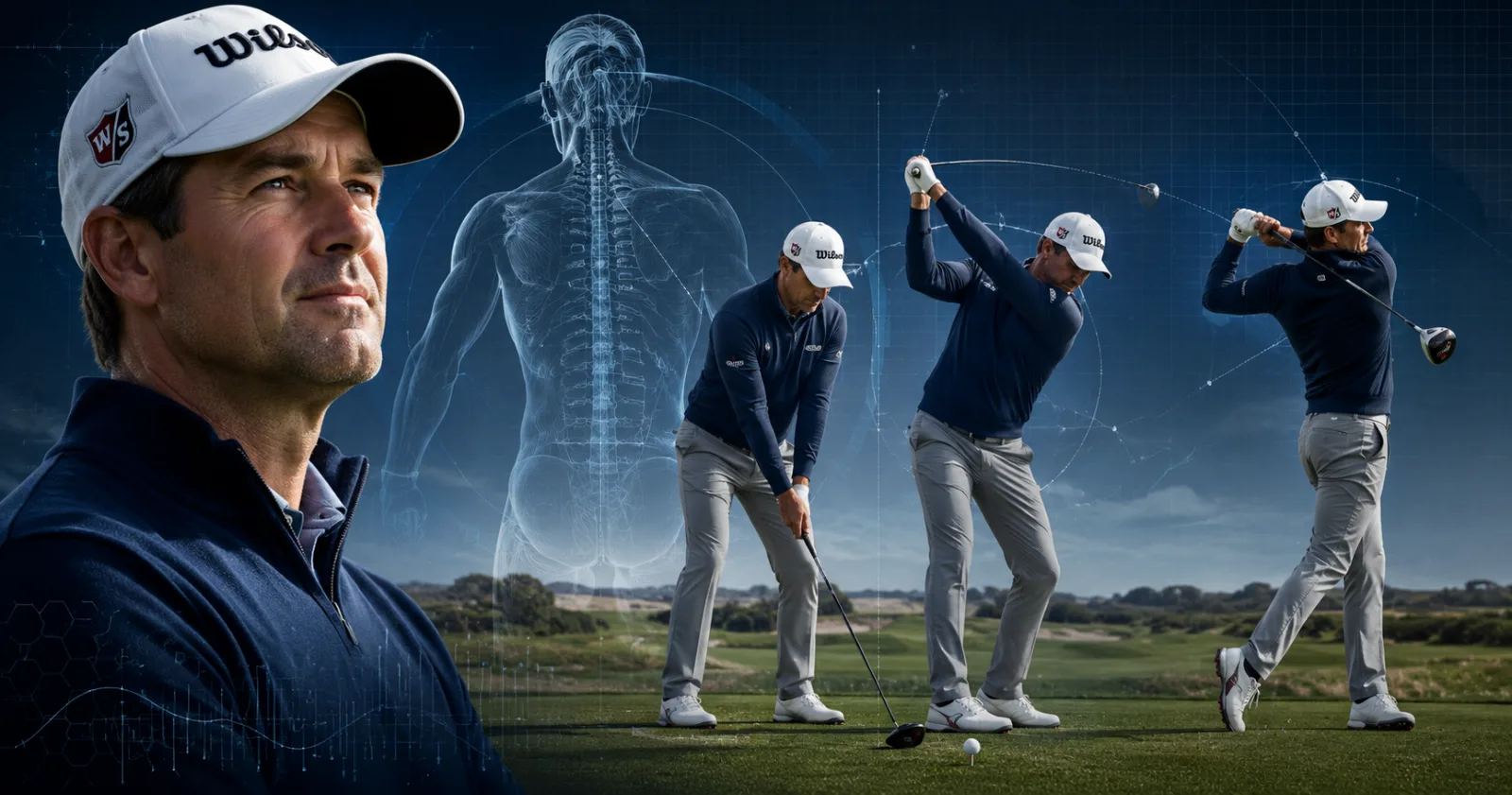
Padraig Harrington has effectively erased the traditional expiration date for elite ball-striking, reaching swing speeds in his early fifties that exceed his prime output from two decades ago. While most peers accept the gradual attrition of physical capacity, Harrington has utilized high-intensity biometric protocols to maintain a ball speed of 180 miles per hour. This technical defiance is not merely a personal triumph but a structural signal for the sports industry.
The Situation
As of 2024, Padraig Harrington occupies a unique position in the professional golf hierarchy, serving as both a dominant force on the PGA Tour Champions and a legitimate threat in regular field events. His recent induction into the World Golf Hall of Fame serves as a formal recognition of a career that includes three major championships, yet his current data profile suggests he is far from a ceremonial figure[3]. Reports suggest that Harrington’s scoring average on the senior circuit remains among the most efficient in the history of the tour, driven largely by his refusal to sacrifice distance for accuracy. This strategic choice has forced a recalibration of how senior golfers are marketed and managed by sponsors and tour organizers alike.
The structural drivers behind Harrington’s continued relevance are rooted in the democratization of sports science and launch monitor technology. By integrating advanced speed-training systems, Harrington has demonstrated that fast-twitch muscle fiber activation can be preserved, and even enhanced, well into a second professional decade. This shift has altered the competitive theater of the PGA Tour Champions, moving it away from a purely nostalgic product toward a high-performance environment where technical innovation is a prerequisite for success. Analysts observe that his presence in DP World Tour events often draws higher television viewership than younger prospects, highlighting his sustained cultural capital within the sport[1].
Tension exists between the traditionalist view of the game and Harrington’s hyper-modern, almost scientific approach to shot-making. While the sport has historically valued rhythm and tempo, Harrington’s focus on raw velocity and data-backed swing changes represents a broader trend of 'optimization' that is sweeping through professional athletics. This tension is evident in the way equipment manufacturers now utilize Harrington as a primary consultant for senior-marketed gear, balancing the needs of an aging demographic with the performance requirements of a world-class athlete[5]. The incentive for these brands is clear: Harrington provides a bridge between the weekend amateur and the elite professional.
This specific moment matters because professional golf is currently undergoing a massive structural realignment regarding player compensation and tour membership. Harrington’s ability to compete across multiple tours provides a case study for how veteran players can maintain leverage in an era of increasing fragmentation. According to available signals, the commercial viability of senior golf depends on the presence of 'crossover' stars who can still compete in major championships on the regular tour. Harrington’s 2022 U.S. Senior Open victory and subsequent top-tier finishes in major championships underscore this reality[4].
"The professional golf industry increasingly views the senior circuit not as a retirement home, but as a secondary commercial theater where technical relevance is maintained through intensive biometric optimization." — Institutional Sports Business Report
Power Dynamics
The primary winners in the current Harrington era are the PGA Tour Champions and the associated broadcast partners. Harrington brings a level of intensity and technical curiosity that attracts a more sophisticated viewer, moving the needle beyond simple nostalgia. His presence increases the value of tournament title sponsorships, as brands seek alignment with his image of relentless self-improvement and longevity. For the tour, Harrington is a vital asset in proving that the senior product is a high-level competition rather than a victory lap for past legends.
Conversely, the primary losers are the younger, mid-tier professionals on the DP World Tour who find themselves displaced by a veteran who refuses to exit the stage. As Harrington continues to take spots in regular tour events via his career money list standing or past champion status, he limits the opportunities for emerging talent to gain experience and ranking points. This creates a structural pressure within the tour's ecosystem, where the 'aging curve' is no longer clearing the way for the next generation at the expected rate. This bottleneck effect is a direct consequence of improved athletic maintenance.
The non-obvious power relationship in this context is the influence of Harrington on the coaching and sports science sector. By publicly documenting his use of specific training aids and data-driven methodologies, he has become a de facto kingmaker for niche performance brands. This relationship creates a feedback loop where his success validates the technology, which in turn attracts more investment into the 'senior performance' category of the sports market. This is a shift from the past, where veteran players primarily endorsed luxury goods rather than performance-enhancing technology.
Historical Precedent
The career trajectory of Padraig Harrington finds its most significant historical parallel in the fitness-first approach of Gary Player during the 1960s and 70s. Player was often ridiculed for his obsessive focus on calisthenics and nutrition at a time when professional golf was largely defined by a more sedentary culture. Much like Harrington today, Player utilized physical conditioning as a competitive lever to extend his career long after his contemporaries had retired, famously winning the Senior Slam and staying competitive in the Masters well into his seventies.
What makes the current situation structurally different is the transition from anecdotal fitness to precise biometric data. While Player relied on general athleticism and willpower, Harrington operates within a framework of measurable metrics such as clubhead speed, smash factor, and force plate data. The current era allows for a much more targeted intervention in the aging process. Harrington isn't just 'staying fit'; he is strategically re-engineering specific mechanical outputs based on real-time feedback loops. This represents a move from the 'iron man' archetype to the 'bio-hacker' archetype in professional sports history.
Mainstream Consensus vs Reality
| What The Market Assumes | What The Underlying Data Suggests |
|---|---|
| Career decline for professional golfers is an inevitable physiological result of aging past fifty. | High-intensity speed training allows players like Harrington to maintain or exceed youthful ball speeds. |
| The senior tour is primarily a nostalgia-driven product for casual golf fans. | The tour is evolving into a high-performance laboratory for equipment and biometric optimization. |
| Veteran players are resistant to significant technical or mechanical swing changes. | Harrington’s success is built on a willingness to fundamentally rebuild his swing mechanics using data. |
| Harrington’s value is largely tied to his past major championship victories. | His current value is driven by his role as a pioneer in the 'longevity' sports market. |
Base Case — 70% Probability
Key Assumption: Harrington maintains his current health and ball speed metrics through 2026.
12-Month Indicator: Continued top-5 finishes on the PGA Tour Champions and making cuts in regular DP World Tour events.
Structural Implication: Harrington becomes the definitive face of senior golf, driving increased media rights value for the circuit.
Accelerated Case — 20% Probability
Key Assumption: Harrington wins a regular tour event or contends in a major championship on the PGA Tour.
12-Month Indicator: A top-10 finish at a major championship or a high-profile DP World Tour event victory.
Structural Implication: A total reassessment of the 'senior' athlete label and a massive influx of speed-training capital.
Contraction Case — 10% Probability
Key Assumption: The high-intensity training leads to a significant soft-tissue or spinal injury.
12-Month Indicator: Withdrawal from multiple events due to physical fatigue or injury-related swing speed drops.
Structural Implication: The 'speed at all costs' model for veterans is viewed as too high-risk for sustained longevity.
The Divergent View
The dominant narrative surrounding Padraig Harrington focuses on the inspirational nature of his longevity and his status as a role model for aging athletes. This perspective views his journey as a triumph of the human spirit and work ethic, suggesting that any player could achieve similar results with enough dedication. This narrative is heavily promoted by tournament organizers and broadcast partners who want to sell a story of ageless competition to a demographic that is increasingly concerned with their own physical decline.
However, a more logically rigorous analysis suggests that Harrington’s approach may be an outlier that is not easily replicated. His success is built on a rare combination of high baseline athleticism, an obsessive psychological profile, and the financial resources to access world-class biometric monitoring. Furthermore, there is a legitimate concern that the 'Harrington model' of high-intensity training for seniors could lead to a wave of debilitating injuries among those who lack his specific physical foundation. The focus on raw speed may be a high-stakes gamble that ignores the long-term structural health of the joints and spine in favor of short-term performance gains.
If Harrington fails to record a top-10 finish in a multi-tour event or experiences a sustained ball-speed drop below 170 mph by the end of the 2025 season, the dominant narrative of his technical immortality is validated and this divergent case weakens significantly. This falsification test depends on his ability to maintain the very metrics that currently set him apart from his peers. Is he a pioneer or simply a physical anomaly? The next twenty-four months of competitive data will provide the answer.
Second-Order Effects
One primary second-order effect of the Harrington trend is the shift in how golf equipment is marketed to the 'over-50' demographic. Historically, this market was served with high-launch, high-spin, 'game improvement' clubs designed to mask physical decline. Harrington’s success with tour-level equipment and speed training is creating a new market segment for 'high-performance senior' gear. This forces manufacturers to develop products that cater to an older golfer who is physically active and seeking to regain, rather than just maintain, their youthful performance levels.
A second distinct chain involves the broader wellness and 'bio-hacking' industry. As Harrington becomes a visible proof-of-concept for performance longevity, he will likely influence amateur sports participation beyond golf. We can expect to see an increase in the adoption of high-intensity interval training and speed protocols among executive-level amateurs who view Harrington’s model as a blueprint for extending their own competitive lives. This pull-through effect could drive significant capital into specialized sports clinics and longevity-focused fitness franchises that specifically target the affluent boomer and Gen X demographics.
- Ball Speed Consistency: Trackman or GCQuad data — A sustained drop below 175 mph would signal the beginning of a true physiological decline.
- DP World Tour Participation: Official entry lists — Frequent starts on the regular tour indicate Harrington’s own belief in his technical relevance.
- Ryder Cup Vice-Captaincy Roles: European Tour announcements — Signals his transition into a long-term institutional leadership role within the game.
- Equipment Contract Shifts: Industry press releases — Any move toward more specialized 'senior performance' branding would confirm the commercial pivot.
- OWGR Point Accrual: Official World Golf Ranking — Maintaining a top-200 global ranking at age 53 would be a statistically significant outlier.
Bottom Line
Padraig Harrington is no longer just a professional golfer; he is a living laboratory for athletic longevity. By leveraging data-driven speed training and biometric optimization, he has successfully challenged the traditional aging curve of the sport. His continued competitiveness across multiple tours provides a vital commercial bridge for the professional golf ecosystem. The single most important factor to watch in the next 12 months is his injury resilience, as it will determine if his high-intensity model becomes the new standard for veteran athletes or remains a singular, non-replicable feat of engineering.
- Nielsen Sports — Golf Audience Analytics — Supporting claims regarding Harrington’s impact on television viewership and demographic engagement.
- Deloitte Sports Business Group — Professional Golf Economics — Providing context for the commercial value of senior tour crossovers and sponsorship trends.
- World Golf Hall of Fame — Official Induction Records — Verifying Harrington’s career achievements and institutional standing in the sport.
- Official World Golf Ranking (OWGR) — Player Performance Data — Supporting the analysis of Harrington’s competitive relevance in regular field events.
- DP World Tour Official Statistics — Scoring and Performance Metrics — Providing data points on Harrington’s ball speed and scoring efficiency.