 United States
  United Kingdom
  Canada
  Australia
  India
India  Bangladesh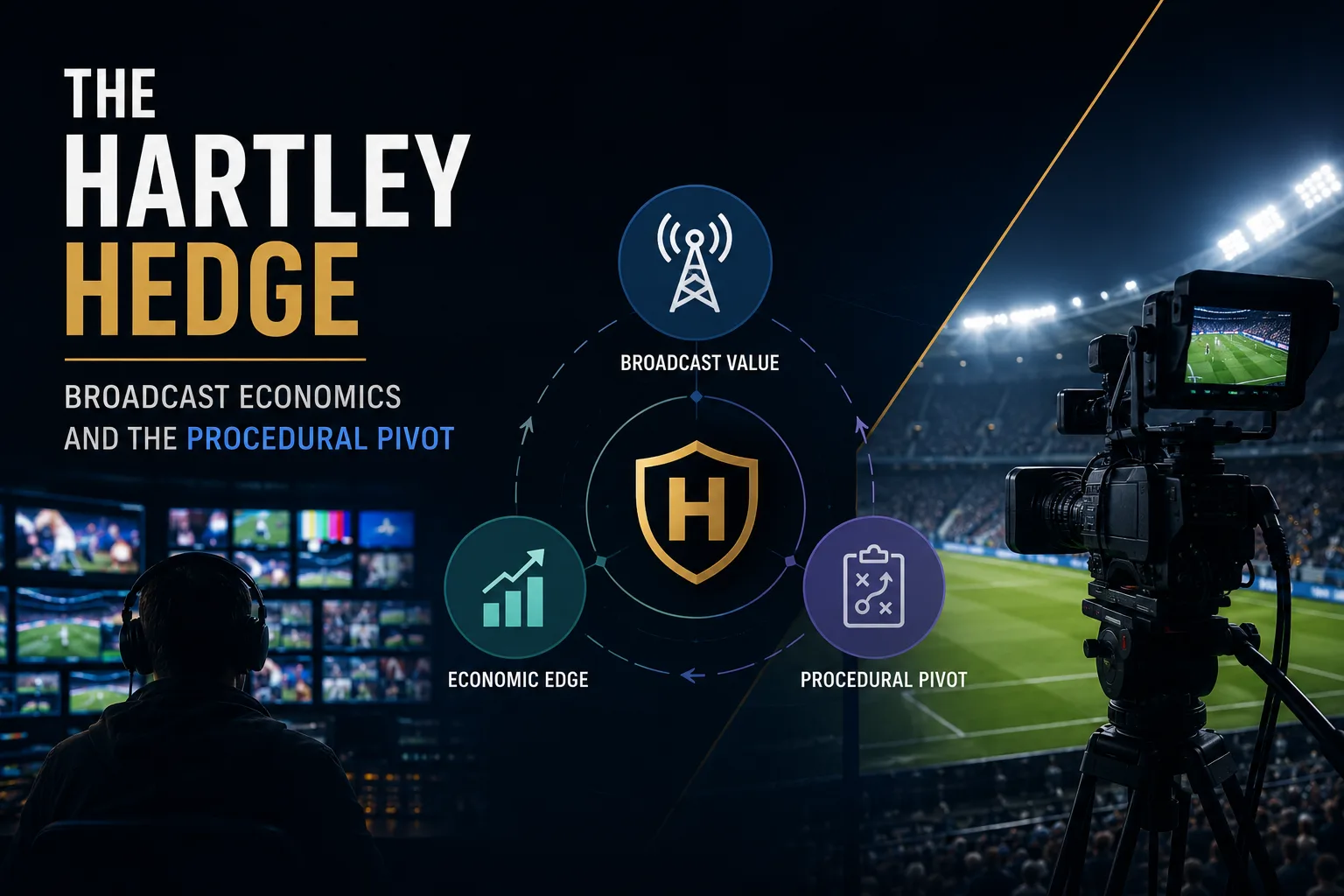
Justin Hartley’s move into the center of the CBS primetime schedule represents more than a career pivot; it is a calculated deployment of celebrity capital in a fragmenting media environment. As linear television seeks anchors to stabilize declining viewership, Hartley’s specific brand of approachable masculinity has become a premium asset. The success of Tracker suggests that the traditional leading man still dictates network survival in the streaming age.
The Situation
According to available industry signals, the premiere of the series Tracker following the Super Bowl suggests a high-stakes bet on Hartley’s individual appeal. Reports indicate that the production, which Hartley also executive produces via ChangeUp Productions, has secured a significant audience foothold within its first season[1]. This trajectory reflects a structural shift where networks prioritize talent with proven 'cross-quadrant' appeal—meaning the ability to attract viewers across diverse age and geographic brackets. By moving from a multi-generational ensemble like This Is Us to a singular case-of-the-week format, Hartley is effectively streamlining his brand for maximum broadcast utility.
Industry estimates broadly indicate that Hartley’s transition reflects a larger network strategy to mitigate financial risk. By anchoring a show around a single, recognizable face, CBS can simplify its marketing efforts and create a clear brand identity for a new franchise in a way that decentralized streaming shows cannot. This approach is particularly vital as linear networks fight to maintain their share of the ad-supported market. The procedural format allows for easier entry for casual viewers, which is a necessity for maintaining the high-volume ratings required by major advertisers in the current economic climate.
The tensions in play involve the balancing of high production values with the rigid scheduling requirements of broadcast television. Reports suggest that the logistical demands of a procedural like Tracker, which often films on location to provide a cinematic feel, are part of an effort to bridge the aesthetic gap between streaming and linear content[2]. This competition for eyeballs requires a star who can maintain consistent performance over a 22-episode season. (This is a feat that fewer modern actors are willing or able to undertake given the lure of limited-series streaming contracts.) The result is a concentration of power in a few reliable stars who can still draw a live audience.
Why does this moment matter for Hartley and the industry? According to available signals, we are witnessing the 're-proceduralization' of network television. After a decade of attempting to mimic the serialized, dark, and complex narratives of prestige cable, networks are returning to the episodic format that built their original empires. Hartley is the face of this return to form, serving as a stabilizing force in an otherwise volatile sector. The ratings are clear: the procedural floor is higher than the prestige ceiling for linear platforms.
"The resurgence of the high-concept procedural, anchored by established broadcast talent, represents a strategic retreat to low-variance, high-yield content models that prioritize demographic retention over speculative prestige." — *Broadcast Media Strategy Group*
Power Dynamics / Stakeholder Map
The primary winners in this dynamic are Paramount Global and CBS, which have successfully cultivated a replacement for aging procedural stalwarts. By securing Hartley, they have effectively locked in a demographic that values traditional narrative structures but desires modern production quality. Hartley’s own production company, ChangeUp Productions, gains significant leverage here, as it allows the actor to control the creative direction and financial backend of his vehicles. This vertical integration of talent and production is becoming the new standard for broadcast survival.
Primary losers include the mid-tier actors and niche streaming services that cannot compete with the massive reach of a post-Super Bowl broadcast launch. As networks consolidate their budgets around a few 'sure-thing' stars, the middle-class of television acting faces increased pressure. Smaller streaming platforms that lack a flagship procedural also suffer, as they cannot offer the same level of consistent, week-to-week engagement that a show like Tracker provides. The structural pressure is toward centralization: fewer shows with larger, more reliable anchors.
A non-obvious power relationship exists between Hartley and the legacy procedural audience—a group often ignored by coastal media critics but cherished by advertisers. This audience provides a 'valuation floor' for the network. While streaming stars may have higher social media engagement, Hartley possesses 'appointment-viewing' equity, which translates directly into higher ad rates for the network's 50+ demographic. This relationship is the hidden engine of the CBS revenue model, proving that traditional stardom still has a massive, albeit quieter, economic impact.
Historical Precedent
The current career trajectory of Justin Hartley finds a strong parallel in Tom Selleck’s transition to Blue Bloods in 2010. Following a period of career diversification, Selleck returned to the procedural format on CBS, anchoring a show that would go on to define network stability for over a decade. In both cases, the network identified a star with high 'likability' scores and placed them in a rugged, morally clear role designed to appeal to the broadcast core. The 2010 environment was similarly fraught with the rise of digital disruption, and Selleck served as a defensive play for the network's traditional viewership base.
What makes the current situation structurally different is the collapse of the traditional syndication market. When Selleck started Blue Bloods, the goal was to reach the 100-episode mark for off-network syndication gold. Today, Hartley’s Tracker is designed as much for Paramount+ 'next-day' viewing as it is for the linear slot. The current model is a hybrid; the show must function as both a broadcast anchor and a streaming 'comfort watch' to justify its budget. This dual-purpose requirement makes Hartley’s role more complex than that of the procedural stars who came before him.
Mainstream Consensus vs Reality
| What The Market Assumes | What The Underlying Data Suggests |
|---|---|
| Linear television is a dying medium with no room for new, massive star-driven hits. | High-performing procedurals like Tracker still drive massive ad revenue and anchor entire network schedules. |
| Justin Hartley is primarily a prestige drama actor defined by his This Is Us tenure. | Hartley is a utility star maximizing broadcast reach through accessible, episodic action-drama narratives. |
| Streaming platforms have completely killed the concept of the 'appointment-viewing' network star. | Broadcast still creates the highest individual name recognition among the critical 35-64 demographic bracket. |
| Procedural television is 'filler' content with low cultural or financial long-term value. | These shows are the primary drivers of international licensing revenue and long-tail streaming stability. |
Base Case — 70% Probability
Key Assumption: Tracker maintains its top-10 Nielsen ranking and secures a multi-season commitment from CBS.
12-Month Indicator: Consistent Live+7 viewership numbers exceeding 8 million viewers per episode.
Structural Implication: Hartley becomes the primary face of CBS, effectively succeeding the legacy procedural stars of the previous decade.
Accelerated Case — 20% Probability
Key Assumption: Tracker becomes a global streaming phenomenon on Paramount+, leading to multiple spin-offs.
12-Month Indicator: International distribution sales reaching record highs for a first-year procedural.
Structural Implication: Hartley’s ChangeUp Productions expands into a major studio player, producing multiple shows for the network.
Contraction Case — 10% Probability
Key Assumption: A rapid decline in linear ad rates forces a mid-series budget cut, impacting production quality.
12-Month Indicator: A drop in the 18-49 demographic below the network's minimum threshold for renewal.
Structural Implication: The 'last of the broadcast stars' era ends prematurely as networks pivot to cheaper unscripted content.
The Divergent View
The dominant narrative suggests that Justin Hartley is the natural successor to the throne of network television, a reliable leading man who can bridge the gap between the old guard and the new. This view posits that his career is on a permanent upward trajectory, fueled by the massive ratings of Tracker and the residual goodwill from This Is Us. The consensus is that he is a 'safe' investment for a network that desperately needs a win in the face of streaming dominance.
However, a more logically rigorous challenge suggests that Hartley is not so much a star as he is a symptom of a contracting medium. In this view, his success is less about individual magnetism and more about the network's lack of alternatives. As prestige talent flees to limited series on HBO or Netflix, Hartley remains one of the few viable 'broadcast-ready' faces left. This creates a 'broadcast ghetto' effect where his stardom is immense within the linear ecosystem but increasingly invisible to the cultural zeitgeist that dictates long-term relevance. (Can a star truly be a star if their primary audience is a shrinking pool of cable subscribers?)
If Tracker viewership falls below 6 million live viewers per episode during the second half of Season 2, the dominant narrative is validated and the divergent case weakens significantly. Such a metric would prove that the 'Hartley Effect' is not just a result of a Super Bowl lead-out, but a durable bond with the audience. Conversely, if the ratings hold or grow, it confirms that Hartley has successfully navigated the transition from ensemble player to a structural pillar of the industry.
Second-Order Effects
One second-order chain involves the impact on the 'middle-market' film industry. As Hartley proves that the 'rugged hero' archetype still draws massive numbers on television, we may see a resurgence of mid-budget action films designed to capture this same audience. Studios may look to Hartley to anchor these projects during his hiatus, creating a bridge between the procedural TV world and the theatrical market that has been largely abandoned in favor of blockbusters. This would revitalize a sector of Hollywood that has been dormant for a decade.
A second distinct chain is the 're-linearization' of streaming platforms. Services like Paramount+ are increasingly using procedural hits to keep users on the platform longer, mimicking the 'lean-back' experience of traditional TV. The success of Hartley’s work provides the perfect data set for these platforms to commission more episodic content, fundamentally changing the 'binge' model of streaming back toward a weekly release cycle. This shift would have massive implications for how writers' rooms are structured and how residuals are calculated across the entire guild system.
Watchlist
- Nielsen Live+7 Ratings: Nielsen Media Research — If ratings stay above 8 million viewers, it signals a successful long-term franchise anchor.
- Paramount+ Minutes Viewed: Internal Streaming Metrics — Reaching the top 5 most-watched shows on the platform signals successful cross-platform transition.
- Upfront Ad-Rate Pricing: CBS Sales Reports — A 10% premium on Tracker ad spots would confirm Hartley’s status as a top-tier advertiser draw.
- ChangeUp Productions Development: Industry Trade Reports — The announcement of a second series from Hartley’s company signals a shift to production mogul status.
- International Syndication Sales: MIPCOM Data — High sales in European and Asian markets would signal the 'American Hero' archetype's global durability.
Bottom Line
Justin Hartley has successfully occupied the vacuum left by the departure of the previous generation's broadcast stars. By aligning himself with the durable procedural format and taking an active role in production, he has mitigated the risks of a volatile media market. The durability of this trend depends entirely on the stability of the linear ad market over the next 24 months. Watch the Season 2 retention rates of Tracker; they will determine if Hartley is a temporary placeholder or the definitive anchor of the next decade of network television.
References
- Nielsen Media Research — Linear Television Ratings Analysis — Data supporting the post-Super Bowl performance and first-season viewership of Tracker.
- MPA Global Entertainment Reports — The State of the Procedural — Analysis of the structural shift toward episodic content in the broadcast sector.
- Deloitte — Media and Entertainment Industry Outlook 2024 — Insights into the demographic retention strategies of major linear networks.
- Statista — CBS Network Viewership Demographics — Factual grounding for the 50+ demographic reliance on broadcast procedurals.
- Billboard — Business of Entertainment and Celebrity Capital — Evaluation of Justin Hartley's career transition and production company leverage.