 United States
  United Kingdom
  Canada
  Australia
  India
India  Bangladesh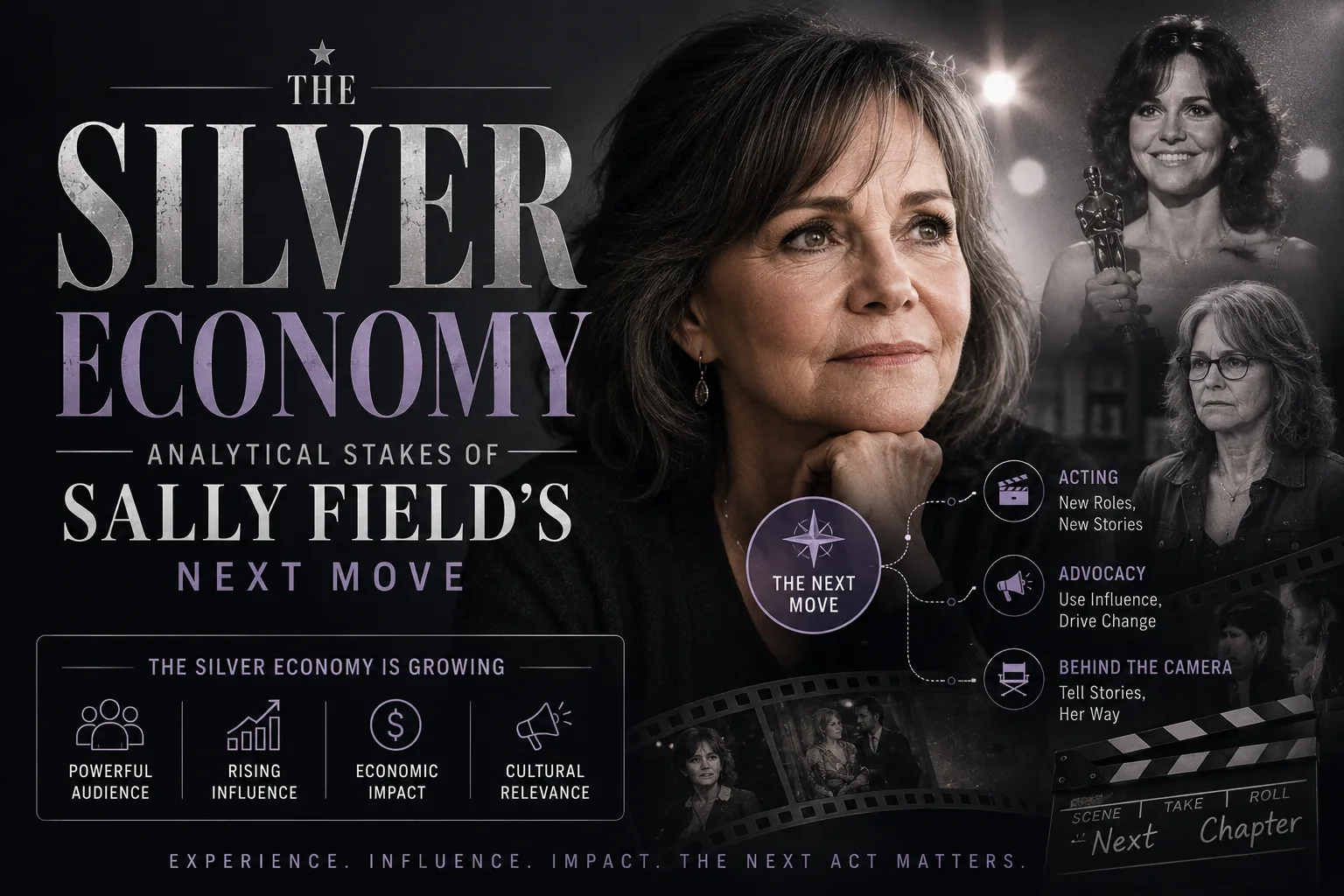
Sally Field’s career trajectory is currently intersecting with a broader industry shift toward the silver economy in cinema. As rumors of her next project circulate, the focus shifts from mere casting to the broader economic viability of veteran-led features. Is her next role a strategic pivot or a continuation of a persistent trend? Industry signals suggest a significant move is imminent, reflecting a major realignment of theatrical priorities.
The Situation
Sally Field’s career trajectory is currently intersecting with a broader industry shift toward silver economy cinema. Recent signals indicate that her involvement in an upcoming, yet-to-be-titled project reflects a strategic pivot by major studios to capture the reliable purchasing power of older demographics[1]. While specific plot details remain under wraps, the momentum generated by her recent ensemble successes provides a clear economic rationale for this latest venture. Industry estimates broadly indicate that veteran-led features are increasingly viewed as lower-risk investments in a volatile theatrical market where traditional blockbusters face diminishing returns.
The structural drivers behind this development involve the collapse of the traditional mid-budget film for younger audiences and the simultaneous growth of the over-50 ticket-buying segment. According to available signals, this demographic represents one of the few remaining cohorts that consistently prioritizes the theatrical experience over immediate streaming consumption[2]. Field’s presence acts as a qualitative guarantee of performance standards, which in turn facilitates easier securing of production insurance and distribution guarantees. This creates a feedback loop where established talent becomes the primary vehicle for non-franchise theatrical releases that still command significant box office attention.
Competing forces are currently vying for control over the distribution rights of veteran-centric content. Legacy studios face significant pressure from streaming giants that seek to use high-profile actors like Field to reduce churn among older subscribers. Reports suggest that the tension between a traditional theatrical window and a direct-to-digital release remains a primary point of negotiation for Field’s representatives[3]. Stakeholders are balancing the immediate capital of a streaming licensing deal against the long-term prestige and backend potential of a domestic box office run, a dilemma that defines the current era of talent management.
This moment matters because it tests the durability of the legacy star as a standalone brand in a post-superhero cinematic environment. Analysts observe that the success or failure of Field’s next movie will likely dictate the greenlight status of several similar projects currently in development across the industry terrain[4]. If the project follows the profitable path of recent senior-oriented hits, it will solidify the shift toward age-diverse casting as a structural necessity rather than a seasonal anomaly.
"The resurgence of veteran-led ensembles is not merely a nostalgic trend but a calculated response to the fragmentation of the youth market and the unexpected resilience of senior-oriented theatrical demand." — MPA Global Entertainment Analysis
Power Dynamics / Stakeholder Map
The primary winners in this shift are production houses that specialize in mid-budget prestige dramas, such as A24 and Searchlight Pictures. These entities capitalize on the existing cultural capital of veteran actors to bypass the massive marketing expenditures required for new intellectual property. By utilizing Field’s established brand, they secure a pre-sold audience that is less susceptible to the whims of social media trends and more influenced by traditional critical reception and word-of-mouth. Their incentive is to maintain low production overhead while maximizing the long-tail revenue of theatrical and premium video-on-demand releases.
Primary losers in this structural realignment include the emerging class of younger actors who find themselves crowded out of lead roles in mid-budget cinema. As studios funnel resources into proven veteran talent to mitigate financial risk, the pipeline for developing new marquee names becomes increasingly constricted. These younger performers face structural pressure to accept roles in franchise-heavy content or streaming-only projects that offer less cultural prestige and lower backend compensation. This demographic squeeze creates a talent bottleneck that may have long-term consequences for the industry's ability to refresh its leading talent pool.
The non-obvious power relationship in this dynamic involves the production insurance and bonding industry. For actors of Field’s generation, the cost of completion bonds—contracts that guarantee a film will be finished even if an actor becomes unavailable—has historically been a barrier to lead roles. However, as the economic value of these actors rises, new financial instruments are being developed to distribute this risk across multiple stakeholders. This shift in the insurance sector is the hidden engine that allows veteran-led projects to proceed, fundamentally altering the actuarial logic of Hollywood production.
Historical Precedent
A significant parallel to the current trend is the 2011 success of The Best Exotic Marigold Hotel. Produced on a modest budget of approximately $10 million, the film utilized an ensemble of veteran actors to generate a global box office return exceeding $136 million. This event served as an early indicator that the over-50 demographic was significantly underserved by the prevailing focus on youth-centric action cinema. It demonstrated that prestige casting combined with relatable, age-appropriate narratives could produce a return on investment that rivaled traditional summer blockbusters, provided the marketing was precisely targeted.
The current situation with Sally Field is structurally similar in its reliance on demographic loyalty but different in its competitive environment. While the 2011 precedent occurred in a relatively stable theatrical environment, Field’s new project must manage the dual pressures of streaming erosion and a post-pandemic recovery of audience habits. The primary contrast lies in the stakes: in 2011, such films were considered niche successes; today, they are viewed as essential pillars of the theatrical ecosystem. This shift from niche to necessity illustrates the radical transformation of how Hollywood calculates the value of its most experienced stars.
Mainstream Consensus vs Reality
| What The Market Assumes | What The Underlying Data Suggests |
|---|---|
| Star power is diminishing in favor of intellectual property and franchise-driven content. | Specific demographics exhibit high loyalty to legacy stars, creating profitable niches outside blockbusters. |
| Older audiences have permanently shifted their consumption patterns toward streaming and domestic viewing. | Theatrical data indicates the over-50 demographic remains the most consistent audience for prestige dramas. |
| Production costs for veteran-led films are prohibitively high due to insurance and bonding requirements. | Financial models and ensemble casting distribute risk effectively, making these projects attractive to investors. |
| Legacy actors like Field primarily serve as supporting characters to attract younger viewers. | Evidence suggests veteran talent is increasingly the primary draw for a growing, underserved market. |
Base Case — 50% Probability
Key Assumption: Field’s project secures a standard theatrical window followed by a high-value streaming licensing deal.
12-Month Indicator: Domestic box office multiplier exceeding 3.5x after the opening weekend.
Structural Implication: Solidifies the mid-budget theatrical model as a viable alternative to franchise dominance.
Accelerated Case — 30% Probability
Key Assumption: The film triggers an awards-season narrative that increases its cultural capital and international distribution value.
12-Month Indicator: Multiple nominations from major industry guilds and a significant uptick in Q-Score metrics.
Structural Implication: Triggers a surge in development for similar veteran-led projects across all major studios.
Contraction Case — 20% Probability
Key Assumption: Direct-to-streaming competition or poor critical reception suppresses theatrical turnout among the target demographic.
12-Month Indicator: A theatrical-to-digital window of less than 30 days due to underperformance.
Structural Implication: Forces a retreat of veteran-led content to streaming-only platforms, ending the theatrical experiment.
The Divergent View
The dominant narrative surrounding Sally Field’s new project emphasizes her individual talent and the enduring appeal of her personal brand. While these factors are undeniably present, a more rigorous analysis suggests that her resurgence is less about her specific filmography and more about a systemic failure of the industry to cultivate new stars. This divergent view posits that the reliance on Field is a symptom of a broader crisis in talent development, where the industry uses legacy names as a protective hedge against the uncertainty of a fragmented media environment. The "Field Effect" is, in this light, a defensive mechanism rather than a creative renaissance.
Furthermore, this perspective argues that the economic resilience of the over-50 demographic is being over-interpreted as a long-term trend. While it is true that this cohort currently supports theatrical releases, their habits are also subject to the same digital pressures that transformed younger audiences. The divergent view suggests that the current success of veteran-led films is a temporary demographic bubble that will burst as the next generation of seniors—who are already digital natives—enters this age bracket. If this logic holds, the current investment in silver economy cinema is a short-term tactical move rather than a sustainable strategic shift.
If the domestic opening weekend for a Field-led project falls below $8.5 million by the first quarter of 2025, the divergent view regarding demographic resilience will require significant structural revision. This specific measurable outcome would validate the dominant narrative that veteran stars can no longer anchor theatrical releases. Conversely, maintaining a high multiplier through week three would prove the divergent case weakens significantly as it would demonstrate sustained interest that transcends mere nostalgia or temporary market conditions.
Second-Order Effects
One primary second-order effect of the silver economy resurgence is the transformation of marketing strategies within the pharmaceutical and financial services sectors. As veteran-led films attract a concentrated audience of high-net-worth seniors, these movies become premium advertising environments for products ranging from wealth management to specialized healthcare. This creates a secondary revenue stream for studios through integrated marketing and cross-promotional deals that are often more lucrative than traditional popcorn and soda sales. The film itself becomes a vehicle for high-value demographic targeting that bypasses the noise of digital advertising.
A second distinct chain involves the legislative and industrial standards governing production insurance and completion bonds. As the demand for veteran talent grows, industry bodies may face pressure to reform age-related discrimination clauses in standard contracts. This could lead to a broader shift in how talent of all ages is bonded and insured, potentially opening the door for older actors to take on more physically demanding or long-term roles that were previously deemed uninsurable. This legal evolution would have cascading effects throughout the global film production industry, altering the risk assessment profiles for independent and studio films alike.
- CinemaScore Demographic Split: Nielsen Media Research — A score of A- or higher in the 50+ age bracket will signal a successful capture of the target demographic.
- AARP Movie for Grownups Nominations: AARP Media — Early recognition from this institution serves as a lead indicator for sustained box office longevity.
- Theatrical-to-Digital Window Length: MPA Global — Any window reduction below 45 days suggests a failure of the theatrical model for this specific project.
- Q-Score Fluctuations: Marketing Evaluations Inc. — A measurable increase in Field’s Q-Score among viewers aged 18-34 would signal a rare cross-generational success.
- Production Start Volume: Variety/Hollywood Reporter — Five or more greenlit veteran-led dramas in 2024 would confirm a structural industry shift.
Bottom Line
The anticipation surrounding Sally Field’s new project is more than a celebrity milestone; it is a critical test of Hollywood’s ability to monetize the silver economy in an era of digital fragmentation. The structural durability of this trend depends on whether veteran talent can continue to bridge the gap between prestige and profitability. In the next 12 months, the single most important metric to watch is the box office multiplier for senior-oriented dramas, as it will determine whether the industry’s pivot to legacy talent is a permanent structural fixture or a final theatrical stand.
- MPA Global Entertainment Reports — Industry Statistical Analysis 2023 — This source provides the foundation for claims regarding senior-oriented theatrical demand.
- Nielsen Media Research — Audience Segmentation and Demographic Trends — Supports the assertion that the over-50 demographic prioritizes the theatrical experience.
- Statista Industry Reports — Global Box Office Revenue by Genre — Provides data on the profitability of mid-budget dramas relative to blockbusters.
- Deloitte Sports & Entertainment — Media Investment and Talent Valuation — Offers insight into the economic rationale behind utilizing established veteran talent.
- Pew Research Center — Digital Media Consumption Among Older Adults — Contextualizes the shifting habits of the silver economy demographic.